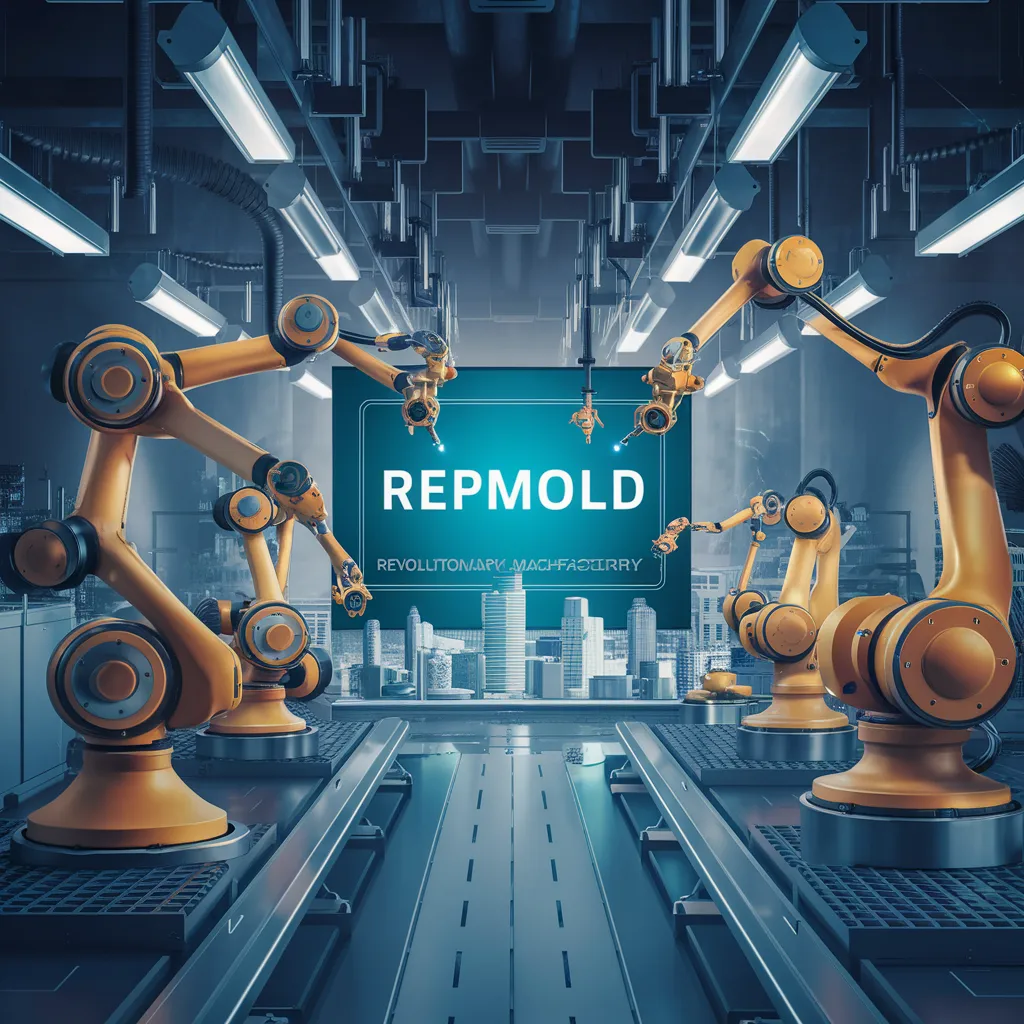
Repmold: Meaning, Technology, and Its Role in Modern Manufacturing
The term Repmold has become increasingly relevant in the world of industrial design, manufacturing, and engineering. It represents a modern approach to mold-making and replication technology that enhances precision, efficiency, and sustainability in production processes. In today’s competitive manufacturing landscape, companies are constantly seeking innovative methods to reduce costs, improve product quality, and accelerate production timelines. Repmold stands at the intersection of these goals, offering advanced solutions that redefine how molds are created, replicated, and utilized across industries such as automotive, aerospace, consumer goods, and medical devices. This article explores the meaning, applications, and technological significance of Repmold, highlighting how it is shaping the future of manufacturing.
1. What Is Repmold? Understanding the Concept and Its Industrial Importance
Repmold is a term derived from “replication mold,” referring to the process or technology used to reproduce molds with high accuracy and consistency. In manufacturing, molds are essential tools used to shape materials into specific forms, whether for plastic components, metal parts, or composite materials. The Repmold process focuses on replicating existing molds or creating new ones using advanced materials and digital technologies such as 3D scanning, computer-aided design (CAD), and additive manufacturing. This approach ensures that every mold produced maintains the same dimensional accuracy and surface quality as the original. The importance of Repmold lies in its ability to streamline production, reduce waste, and maintain uniformity across large-scale manufacturing operations.
2. The Evolution of Repmold Technology in Manufacturing
The concept of Repmold has evolved alongside advancements in industrial technology. Traditionally, mold-making was a labor-intensive process that required skilled craftsmanship and significant time investment. With the advent of digital manufacturing, the process has become faster, more precise, and more cost-effective. Repmold technology integrates modern tools such as 3D printing, CNC machining, and laser scanning to replicate molds with exceptional accuracy. This evolution has transformed industries that rely heavily on molding, enabling manufacturers to produce complex designs with minimal human error. The continuous improvement of Repmold technology reflects the broader trend of automation and digitalization in manufacturing, where precision and efficiency are paramount.
3. How Repmold Works: The Process Explained
The Repmold process typically begins with the digital capture of an existing mold or prototype using 3D scanning technology. This data is then converted into a digital model using CAD software, allowing engineers to analyze and refine the design. Once the digital model is finalized, it is used to create a new mold through additive manufacturing or precision machining. The replication process ensures that every detail of the original mold—down to the smallest texture or curvature—is accurately reproduced. In some cases, Repmold also involves the use of advanced materials such as high-performance polymers or metal alloys to enhance durability and performance. The result is a mold that meets exact specifications and can be used repeatedly without compromising quality.
4. Applications of Repmold Across Industries
The versatility of Repmold technology makes it applicable across a wide range of industries. In the automotive sector, it is used to produce molds for components such as dashboards, bumpers, and engine parts. In aerospace, Repmold ensures the precision required for lightweight composite materials used in aircraft manufacturing. The medical industry benefits from Repmold in the production of surgical instruments, prosthetics, and medical device casings, where accuracy and hygiene are critical. Consumer goods manufacturers use Repmold to create molds for packaging, electronics, and household products. The technology’s adaptability allows it to meet the unique demands of each industry, making it a cornerstone of modern production systems.
5. The Advantages of Repmold Technology
The adoption of Repmold offers numerous advantages that enhance both productivity and product quality. One of the primary benefits is precision—Repmold ensures that every mold produced is an exact replica of the original, minimizing defects and inconsistencies. It also significantly reduces production time, as digital replication eliminates the need for manual mold-making. Cost efficiency is another major advantage, as Repmold reduces material waste and labor expenses. Additionally, the technology supports sustainability by enabling the reuse and recycling of molds, thereby reducing environmental impact. The combination of speed, accuracy, and cost-effectiveness makes Repmold an indispensable tool for manufacturers seeking to stay competitive in a rapidly evolving market.
6. The Role of Digitalization and Automation in Repmold
Digitalization and automation are at the heart of Repmold technology. The integration of computer-aided design, 3D scanning, and automated production systems allows for seamless replication and quality control. Automation ensures that molds are produced with minimal human intervention, reducing the risk of error and increasing consistency. Digitalization also enables real-time monitoring and data analysis, allowing manufacturers to optimize production processes and predict maintenance needs. The synergy between Repmold and Industry 4.0 technologies—such as artificial intelligence, robotics, and the Internet of Things (IoT)—is transforming manufacturing into a more intelligent and adaptive ecosystem. This digital transformation ensures that Repmold remains at the forefront of innovation in industrial production.
7. Challenges and Future Prospects of Repmold
Despite its many advantages, Repmold technology faces certain challenges that must be addressed for continued growth. The initial investment in digital equipment and skilled personnel can be substantial, particularly for small and medium-sized enterprises. Additionally, maintaining the precision of digital replication requires regular calibration and quality assurance. However, as technology advances and costs decrease, these challenges are becoming less significant. The future of Repmold looks promising, with ongoing research focused on improving material performance, automation, and sustainability. Emerging trends such as hybrid manufacturing and AI-driven design optimization are expected to further enhance the capabilities of Repmold, making it an integral part of the next generation of manufacturing solutions.
Conclusion
Repmold represents a revolutionary step forward in the field of manufacturing and mold-making. By combining digital precision, automation, and material innovation, it offers a faster, more efficient, and more sustainable approach to production. Its applications span multiple industries, from automotive and aerospace to healthcare and consumer goods, proving its versatility and value. As technology continues to evolve, Repmold will play an increasingly vital role in shaping the future of industrial design and production. It stands as a testament to how innovation can transform traditional processes into smarter, more sustainable systems that drive global progress.
FAQs
1. What does Repmold mean?
Repmold refers to the process or technology used to replicate molds with high precision using digital tools such as 3D scanning, CAD modeling, and additive manufacturing.
2. How does Repmold work?
The process involves capturing a digital model of an existing mold, refining it through design software, and reproducing it using advanced manufacturing techniques like 3D printing or CNC machining.
3. What industries use Repmold technology?
Repmold is widely used in automotive, aerospace, medical, and consumer goods industries for producing high-precision molds and components.
4. What are the benefits of Repmold?
Key benefits include improved accuracy, reduced production time, cost efficiency, and sustainability through material reuse and waste reduction.
5. Is Repmold part of Industry 4.0?
Yes, Repmold aligns with Industry 4.0 principles by integrating digitalization, automation, and data-driven manufacturing processes.
6. What materials are used in Repmold production?
Common materials include high-performance polymers, metals, and composite materials designed for durability and precision.
7. How does Repmold improve sustainability?
By enabling mold reuse and minimizing material waste, Repmold supports eco-friendly manufacturing practices and reduces environmental impact.
8. What challenges does Repmold face?
Challenges include high initial investment costs, the need for skilled operators, and maintaining consistent quality across digital systems.
9. Can small businesses use Repmold technology?
Yes, as technology becomes more affordable and accessible, small and medium-sized enterprises are increasingly adopting Repmold for efficient production.
10. What is the future of Repmold?
The future of Repmold lies in greater automation, AI integration, and sustainable material innovation, making it a cornerstone of next-generation manufacturing.